
Finding a good builder in Rugby starts with eight practical questions, supported by answers you can check. A recommendation or attractive portfolio can help you create a shortlist, but neither tells you exactly who will run your extension, what the quotation includes or how changes will be agreed. This guide turns the first conversation into a useful comparison record. It focuses on ordinary home extensions: matching experience, checking the contracting business, understanding responsibilities and testing the programme before you commit. Keep each answer beside its evidence and any unresolved point, so confidence comes from the proposed arrangements rather than a persuasive meeting.
The short answer
Use eight questions to build a checked shortlist
To find a good builder for a Rugby extension, ask about comparable work, the contracting business, specialist checks, written scope, approvals, programme, payments and handover. Record the evidence behind each answer and resolve important gaps before appointment. Compare the same design and finish schedule across bidders. A review score, directory listing or company registration alone cannot establish suitability for your project.
1. Which completed work is genuinely comparable?
A useful reference answers questions about a similar scope, not simply whether the customer liked the builder.
Begin your shortlist with recommendations from people you know, your designer and relevant trade-body searches. The FMB hiring guide recommends checking previous work and speaking to customers. Treat these as routes to investigate, rather than a ranking of who must be best for your house.
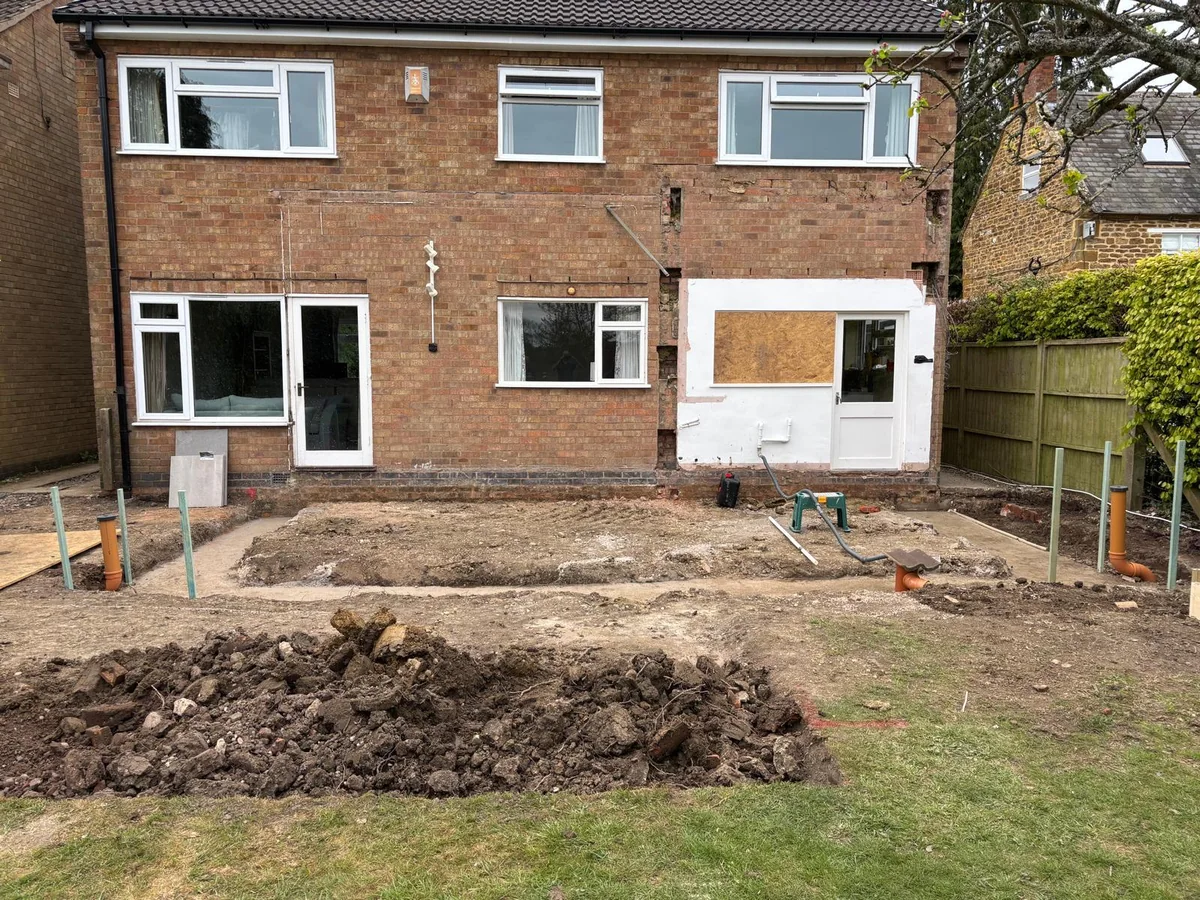
For an extension, explain the features that matter: occupied rooms beside the work, an opening through the existing wall, restricted delivery access or a kitchen that must remain usable. Ask the bidder which past work involved those constraints and what they would carry forward into your proposal. A large portfolio of unrelated work may answer less than one relevant conversation.
Ask permission before contacting a previous customer or visiting a property. Discuss one specific event: a design change, delivery problem or issue discovered after opening up. What was communicated, how was the revised cost agreed, and what happened afterwards? Record the answer without publishing someone else’s private details.
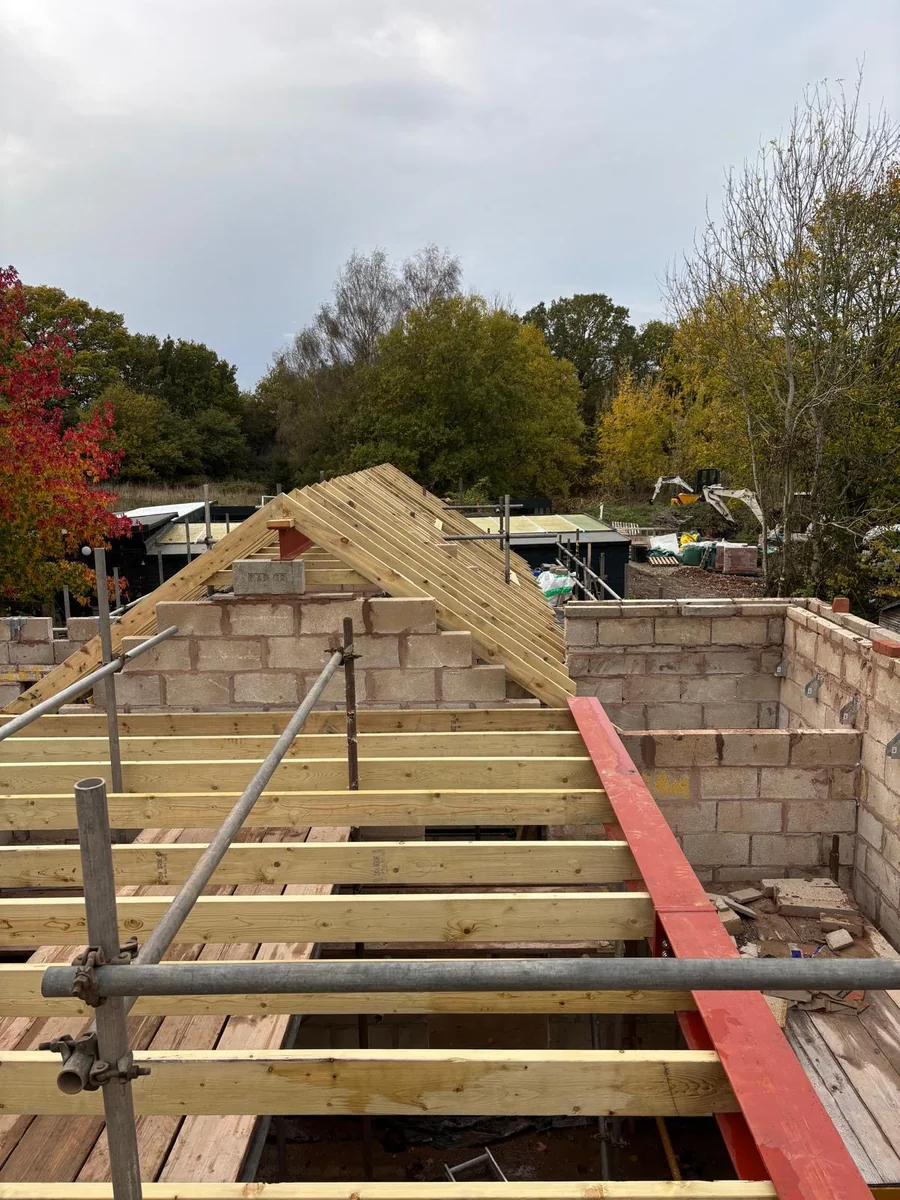
Keep photographs in proportion. They can show visible finishes or work stages, but do not establish hidden construction quality, inspection results or who performed every trade. Request the context of the example and the role of the proposed team. Separate what you have seen from what still needs checking.
Check the guidance: FMB: choosing a builder.
2. Who exactly would I be contracting with?
The business named in the agreement should be clear before you pay or book a start.
Ask for the legal or trading identity, business contact details and the name that will appear on the quotation, agreement and invoices. If a limited company is involved, use the GOV.UK company-information route to check its recorded details. Public information includes incorporation, officers, previous names and insolvency information.
Company registration is an identity check, not an assessment of workmanship or a guarantee that a project will finish. Equally, a sole trader does not become unsuitable simply because there is no limited-company number. The practical question is whether the proposed contracting party and the paperwork agree, and whether discrepancies have a clear explanation.
Create an evidence record for each shortlisted bidder. Use columns headed answer, document or source, date checked, unresolved question and person responsible. This helps you distinguish an absent document from an adverse fact. Avoid awarding points for promises that have not yet been supported.
For example, a quotation may use a trading name while the agreement names a company. Ask the business to explain that relationship in writing. Do not infer dishonesty from a difference, or silently assume the names are interchangeable. Resolve the identity before deciding which account or party should receive a payment.
Check the guidance: GOV.UK: company information.
3. What checks apply to the people doing each trade?
A general building appointment does not answer every specialist competence or insurance question.
Ask who will undertake and supervise the different parts of the extension. Put the proposed main contractor, designer, engineer and specialist trades on one responsibility sheet. Ask which appointments sit within the building quotation and which you are expected to make separately. This is particularly useful where existing electrical or heating services will move.
Where a membership or registration is claimed, use the relevant organisation’s current lookup and match the business details and work category. A logo on a website is a starting point for a check. Electrical Safety First provides a registered-electrician search; ask which specialist will carry out the electrical installation and provide its records.
Request current insurance evidence and a clear explanation of the work and parties it covers. Refer uncertain terms to the insurer or broker rather than treating a certificate title as the complete answer. Keep your own household insurance arrangements separate and tell your insurer about the proposed work before relying on existing cover.
Write the outstanding check precisely: “confirm named electrical contractor and certification responsibility before first fix” is more useful than “check qualifications”. None of these questions asserts that a particular builder holds a membership, policy or qualification. They are a method for checking the actual team proposed for your house.
Check the guidance: Electrical Safety First: registered electricians.
4. What is included in this written quotation?
Prices become comparable when drawings, finishes, exclusions and tax are put on the same basis.
Give each bidder the same dated brief and drawing revision. Identify demolition, structure, roofing, windows, services, finishes, waste, protection and making good. Ask where the price stops if the offer is for a shell. Our quotation checklist helps organise the scope rather than relying on a headline total.
The GOV.UK VAT guidance says most building work on houses and flats attracts 20% VAT, with exceptions. Ask each bidder to state the actual tax treatment and final payable sum. Never decide that an unlabelled online figure, estimate or quotation must be tax inclusive or exclusive.
Consider hypothetical arithmetic, not a market estimate or Belmax price. Offer A is £50,000 excluding 20% VAT, so its payable total is £60,000. Offer B is £58,000 including applicable VAT but excludes a separately quoted £4,000 item, also tax inclusive. Its known comparison total is £62,000. Unknown items remain additional to both.
Attach the missing-item list to that calculation. Do the two offers include the same windows, floor finish and professional fees? A lower total may represent a different stopping point. Ask for written clarification before deciding there is a saving. Avoid adding generic internet allowances where a real specification and price are still needed.
| Question | Evidence to keep | If unresolved |
|---|---|---|
| Who is appointed? | Matching quotation and contracting identity. | Ask for the relationship between names. |
| What is priced? | Drawing revision, finish schedule and exclusions. | Request a revised written scope. |
| What is payable? | Tax basis, stages and separately quoted items. | Keep the comparison total provisional. |
| Who closes the job? | Handover responsibilities and required records. | Agree these before appointment. |
Use a decision record rather than a star score
For each material difference, record the question, evidence received, cost or programme effect and date for resolution. Mark it resolved, unresolved or outside the proposed appointment. Choose which gaps prevent your decision before comparing bidders, so an attractive meeting does not change the standard you apply.
Check the guidance: GOV.UK: VAT for builders.
5. Who checks planning and technical approval in Rugby?
Choosing a builder and establishing permission are different decisions.
Use the property address and actual proposal to establish the planning route. Rugby Borough Council warns that permitted development rights can be adapted or removed and may differ for listed buildings and conservation areas. A nearby extension or a bidder’s general reassurance does not determine your property’s position.
Ask who will check planning history, prepare any application and respond to design conditions. Record the documents that must be ready before the intended start. If drawings are still changing, make that visible in the quotation request rather than presenting a provisional design as a settled scope.
GOV.UK distinguishes building regulations approval from planning permission. Agree the technical-design and building-control route separately, including who arranges inspections and gathers completion records. For ordinary work outside the higher-risk regime, the government identifies local authority building control or a registered building control approver as possible routes.
Use a responsibility meeting to expose gaps. Who supplies structural calculations, who sends revised details to the builder, and who checks that an inspection has been booked before relevant work is covered? The point is to allocate these tasks explicitly. A payment-stage inspection and a statutory building-control inspection also serve different purposes.
Check the guidance: Rugby Borough Council: planning checks.
6. Who will manage the programme and my occupied home?
A start date is useful only alongside the preparation and decisions it depends on.
Ask who will be your day-to-day contact, who supervises subcontractors and how progress will be reported. Discuss working access, keys, deliveries, waste and the parts of the house you expect to keep using. Confirm how children, visitors or pets will be kept away from the working area without assuming your household can carry that responsibility informally.
Request a programme that distinguishes design and approvals, procurement and construction. Identify the items you must choose and their decision dates. Our extension programme guide helps structure the conversation, without making a completion promise for your project.
Test one realistic interruption. If the selected doors arrive later than expected, what can continue, who revises the sequence, and how will any extra protection or access cost be agreed? Ask for the process and communication route. A blanket promise that nothing will change leaves less to assess than a clear explanation of dependencies.
Keep household commitments visible
Keep household arrangements on a separate calendar. Record when an alternative cooking area, temporary accommodation or restricted access would start and end, if relevant to you. Ask how changes to the construction programme will be communicated early enough to revise those commitments. Do not assume that a building quotation automatically includes your separate living costs.
7. How will payments and changes be agreed?
The payment plan and variation process belong in the agreement before work starts.
Use the stage-payment guide to ask what evidence releases each payment, when it becomes due and how it appears in the cumulative account. Any deposit should have an explained purpose and written treatment. There is no universal percentage in this guide and no suggestion that Belmax offers a particular arrangement.
Walk through an example change without assigning a price. Suppose you request a wider opening after the structural design is complete. Who assesses the revised detail, obtains the cost and time effect, and authorises the change? Agree the record you will receive before changed work proceeds. Keep drawings and decisions together rather than scattered across messages.
Ask what happens when concealed conditions differ from the assumptions used for the quotation. The response should identify the evidence, proposed remedy, responsible decision-maker and effect on the programme. That allows a useful conversation without pretending a survey can remove every unknown.
Keep invoices, payment confirmations and the change record in the same project folder. If payment details change, verify them through a contact route you already know before acting. This is a practical administrative check, not a claim that any particular business is unsafe. Ask for clarification wherever the payee and contracting party do not appear to match.
8. What will completion and aftercare actually include?
Define the handover package while comparing offers, not after the last trade leaves.
Ask what condition the extension will be in at completion and what remains for others. Record the relevant inspection, testing, product and completion documents, who provides them and how outstanding adjustments are listed. If a guarantee is proposed, ask who issues it, what it covers and which conditions apply rather than assuming a label explains the terms.
Agree how snags will be reported, who responds and how access for adjustments is arranged. Also identify the route for raising a disagreement under the proposed contract. Read the written terms and obtain suitable advice where the responsibilities or consequences are unclear. Avoid making unilateral changes to payment terms based on a general online checklist.
Before choosing, revisit every unresolved item in your evidence record. Separate a question that can be answered during survey from one essential to appointment. If a bidder cannot yet price an uncertain detail, ask how it will be investigated and agreed. Do not turn uncertainty into a precise budget by ignoring it.
For a conversation about extensions in Rugby, prepare the postcode, photographs, intended room use and current drawings. Explain access restrictions, preferred timing and which checks remain open. Ask the same eight questions of any shortlisted team, including Belmax. A useful first discussion should leave you clearer about the next investigation and the information needed for a reliable quotation.
What clients say
Recent words from Belmax clients.
Three public five-star review excerpts, checked 24 September 2026.
“We have been really happy with the service from Belmax Builders. They are reliable, professional and, most importantly, always kept to the agreed schedule.”
“Belmax did the job to very high standard, communicated with us the whole time and explained really well what to expect.”
“Job was started on time and Rob kept us up to date every step of the way. The finished conversion looks amazing.”
Frequently asked questions
How do I find a good builder in Rugby?
Start with recommendations, your designer and relevant trade-body searches, then check the proposed team against your extension. Ask about comparable work, contracting identity, specialist responsibilities, written scope, approvals, programme, payments and handover. Keep evidence beside each answer and resolve important gaps before appointment. A local recommendation is useful, but it cannot establish what a particular quotation includes or who will manage your proposed project.
How many builder quotations should I compare?
The FMB recommends at least three detailed written quotations. Give each bidder the same dated drawings, brief and finish schedule so the comparison has a common basis. Check exclusions, provisional items, separately appointed professionals and VAT before comparing totals. Three different scopes do not become comparable just because they are written down. If an important detail remains unresolved, ask for clarification rather than inventing an allowance.
Does Companies House registration prove a builder is good?
No. The public record helps establish information about a limited company, such as its registered details, officers and previous names. It does not inspect your proposed extension or guarantee workmanship. Match the contracting identity to the paperwork, then check relevant work, references and proposed responsibilities separately. A sole trader may not have a limited-company number; ask clearly who you would appoint and pay before deciding.
Should I choose the cheapest extension quotation?
Compare the complete scope and final payable amount first. A lower total might exclude finishes, fees or work another bidder includes, or leave important costs unresolved. Ask for the VAT basis and a written explanation of material differences. Use the same requirements for each option and decide whether the proposed arrangements suit your household. This guide does not set a market price or recommend a particular bidder.
Can my builder confirm that planning permission is unnecessary?
Ask for a property-specific planning assessment and identify who is responsible for it. Rugby Borough Council says permitted development rights can be adapted or removed, with different considerations for listed buildings and conservation areas. A general comment or nearby example does not settle your proposal. Building regulations approval is a separate check. Record the appropriate routes and who obtains the required information before agreeing the construction start.
Sources
Figures, fees and rules change. Every source below was checked on 27 October 2026.
- FMB: choosing a builderTrade-body guidance on shortlisting and verification, checked 27 October 2026.
- GOV.UK: company informationPublic information available from Companies House, checked 27 October 2026.
- Electrical Safety First: registered electriciansDirect search for electrical specialists, checked 27 October 2026.
- Rugby Borough Council: planning checksProperty restrictions and separate building regulations, checked 27 October 2026.
- GOV.UK: building regulations approvalTechnical approval routes separate from planning, checked 27 October 2026.
- GOV.UK: VAT for buildersMost work on existing homes attracts 20% VAT, subject to exceptions. Checked 27 October 2026.